In the quest of energy efficient futuristic buildings, CFD plays an important role in understanding and effectively using the air circulation patterns for maximum comfort constrained to minimum energy demand.
In general, the flow geometries in heating, ventilation, and air-conditioning (HVAC) applications comprise large open spaces and small gaps between structures, posing difficulties for cost effective use of the turbulence modeling approaches. Algebraic or zero equation turbulence models, which do not solve for additional transport equation, are suitable candidates for these (HVAC) flows with simplified geometries, although these models (e.g. Baldwin-Lomax model, Cebeci-Smith model) may not incorporate turbulence history effects.
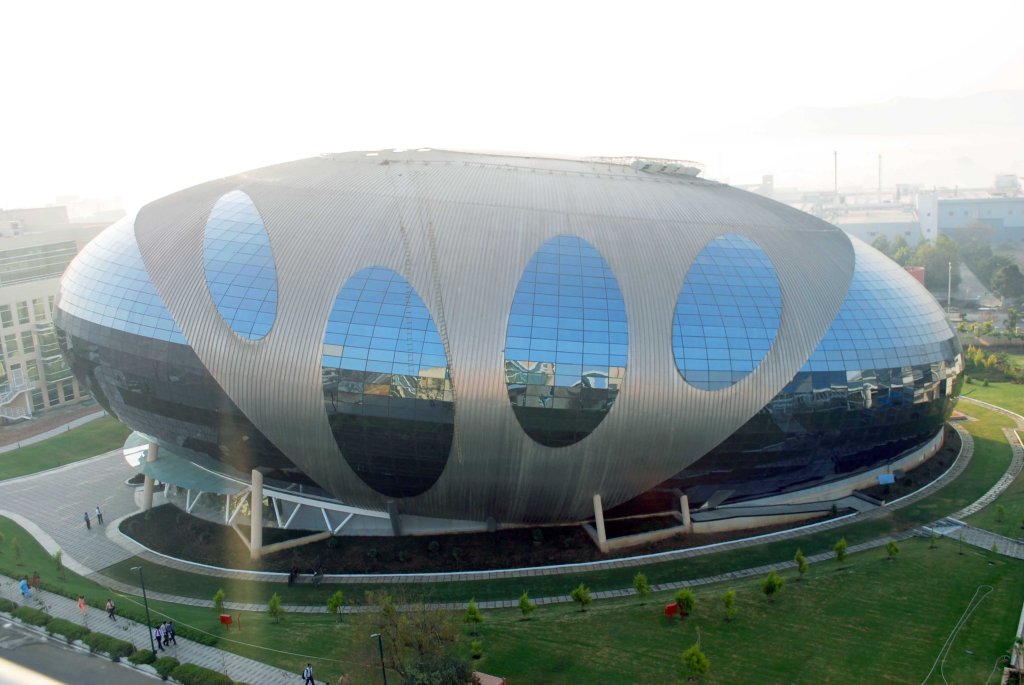
As a consultant engineer at Construction Catalysers along with their experts, we performed CFD analysis of ongoing construction projects (for example Fig. 1) for internal as well as external flow dynamics, incorporating CFD in the design process.
 Vilas Shinde